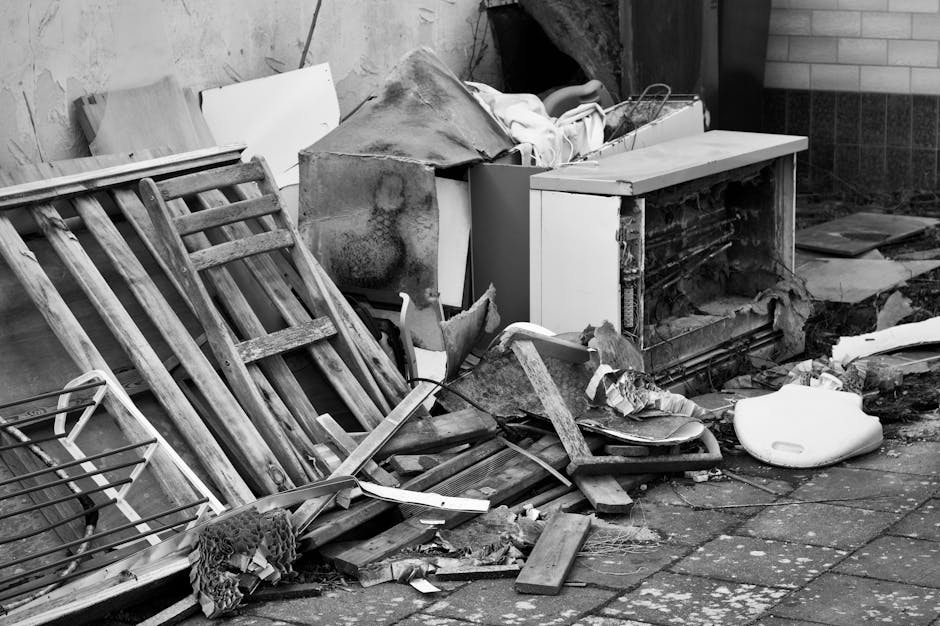
Southgate shop clearance case study rubbish removal success
If you are dealing with a shop clear-out in Southgate, you probably want two things at once: the place emptied properly, and the whole job handled without drama. That is really the heart of Southgate shop clearance case study rubbish removal success. It is not just about shifting old stock and broken fittings. It is about getting a retail unit back to a usable state, on time, with as little disruption as possible.
Anyone who has stood in a half-stripped shop at 7:30 in the morning, looking at piles of shelving, packaging, and random odds and ends, knows the feeling. It can feel bigger than it looked on paper. This guide breaks down how a successful shop clearance works in practice, what makes it efficient, where the common pitfalls are, and how to judge whether a clearance plan is actually fit for purpose. We will also look at a realistic case study-style example, so you can picture how the process comes together without the fluff.
For related services, it can help to understand the wider picture too, especially if your project involves an office clearance, business waste removal, or mixed commercial items that need careful handling rather than a rushed sweep-up.
Table of Contents
- Why Southgate shop clearance case study rubbish removal success Matters
- How Southgate shop clearance case study rubbish removal success Works
- Key Benefits and Practical Advantages
- Who This Is For and When It Makes Sense
- Step-by-Step Guidance
- Expert Tips for Better Results
- Common Mistakes to Avoid
- Tools, Resources and Recommendations
- Law, Compliance, Standards, or Best Practice
- Options, Methods, or Comparison Table
- Case Study or Real-World Example
- Practical Checklist
- Conclusion
- Frequently Asked Questions
Why Southgate shop clearance case study rubbish removal success Matters
A successful shop clearance matters because retail spaces are unforgiving. They are often compact, awkwardly fitted out, and full of items that do not move as easily as you hope. Display units, tills, stock cages, shelving, back-room storage, old signage, cardboard, packaging, and worn furniture all tend to pile up in the same small space. One slow collection can disrupt a whole handover schedule.
In Southgate, this is especially relevant for businesses working to tight lease deadlines, refits, relocations, or end-of-tenancy requirements. A well-managed clearance reduces the chance of last-minute panic, accidental damage, or a truckload of waste sitting outside longer than it should. And let's face it, no shop owner wants to be the one apologising to neighbours while flat-pack debris and broken display panels are still leaning against the wall.
A solid clearance also helps with presentation. If you are handing the unit back, or preparing it for a fit-out, the space needs to look genuinely cleared rather than "mostly done". That difference matters. It can affect how quickly the next stage begins, how your landlord views the condition of the unit, and how smoothly your own team can move on.
Expert summary: the real success in shop clearance is not just volume removed; it is the combination of speed, safety, sorting, and reliable disposal. A job can look fast and still be poorly handled. The best results usually come from planning the waste stream before the first item is lifted.
How Southgate shop clearance case study rubbish removal success Works
Shop clearance works best when it is treated like a short project, not a one-off rubbish lift. The process usually begins with a walk-through or a straightforward assessment of what needs to go: fixtures, fittings, stock, packaging, damaged items, e-waste, and anything bulky or awkward. That early look is where the real saving often happens, because you can separate the simple stuff from the items that need more care.
From there, the team plans access, timing, labour, and vehicle capacity. In a Southgate high-street setting, access can be the deciding factor. Is the unit on a busy road? Is there rear access? Are there loading restrictions? Can the work be done before opening hours? These are the kinds of questions that save time later. A job that sounds quick can stall completely if a van cannot park close enough, or if the team has to carry waste further than expected.
Next comes sorting. Reusable items may be set aside. Recyclable materials such as cardboard, certain plastics, metals, and clean wood can be separated where appropriate. Then the rest is removed in a controlled way. Good clearance teams usually work with a practical eye: they are not trying to make the room look tidy for five minutes, they are trying to leave it ready for the next step.
In many cases, a specialist service like waste removal is combined with furniture handling or large-item pickup. If the job includes counters, office chairs, shelves, or reception fittings, a related service such as furniture clearance can be useful because it fits the scale of the task better than general rubbish collection alone.
The final stage is disposal and confirmation. Good practice means you know what has been removed, where it is going, and how any recyclable material is being handled. That transparency matters more than people think. It is one thing to clear a room. It is another to know the job has been done properly.
Key Benefits and Practical Advantages
There are obvious benefits to a successful shop clearance, but the practical advantages go a bit deeper than simply "getting rid of stuff". If you have ever tried to manage a commercial move or closure with clutter still in the way, you will know how much smoother things run once the waste is under control.
- Faster turnaround: clearing in one planned effort is usually quicker than handling waste piecemeal over several days.
- Better site safety: fewer trip hazards, fewer loose objects, and less clutter around exits and work areas.
- Cleaner handover: a clear unit is easier to inspect, document, and return.
- Improved recycling potential: separating materials properly can reduce the amount sent to general waste.
- Less stress for staff: your team can focus on stock, closing tasks, or relocation instead of dragging furniture around.
- More predictable costs: a clear scope usually keeps the job tighter and avoids surprise add-ons.
There is also a quieter benefit: momentum. Once the clutter starts disappearing, the whole job feels less heavy. That may sound small, but in real retail settings it helps. People make decisions faster when the space is visible again. You can see the floor. You can see the plan. Funny how that works.
For businesses trying to reduce waste over time, pairing a clearance with recycling and sustainability principles is a sensible move. It is not about sounding green for the sake of it. It is about handling waste in a way that makes commercial sense and avoids needless landfill where practical alternatives exist.
Who This Is For and When It Makes Sense
This type of clearance is not just for shop closures. In fact, the need often comes up in less dramatic moments. A retailer may be refitting a small unit, replacing fixtures, changing product lines, or emptying a stockroom that has quietly become unmanageable. One day it is "just a few old shelves"; two months later it is a back room full of out-of-date displays and broken boxes. It happens.
It makes sense if you are:
- closing or relocating a retail unit in Southgate
- preparing a shop for refurbishment or a new tenant
- clearing old fixtures, shelving, or display furniture
- removing unsold stock, packaging, or surplus materials
- dealing with a mix of household-style items and commercial waste
- needing a quick but tidy clearance before a deadline
It is also relevant if your premises include a storage room, upstairs office, basement area, or mixed-use space. In those situations, a broader service like home clearance or flat clearance may help if the waste is a little more mixed than a standard shop-only load. Not everything in a retail unit is strictly "shop waste", after all.
Truth be told, the sooner you accept that the clutter needs an organised plan, the easier the whole project becomes. Waiting rarely improves the pile.
Step-by-Step Guidance
If you want a clearance that feels controlled rather than chaotic, follow a simple process. It does not need to be fancy. It just needs to be consistent.
- Walk the site and list the waste types. Separate shelving, fixtures, packaging, stock, broken items, and anything fragile or hazardous.
- Decide what stays, what goes, and what can be reused. This prevents accidental disposal of items that still have value.
- Check access and timing. Note loading points, parking, stairways, lift access, and any restrictions that may affect the job.
- Choose the right clearance method. A small load may suit a simple van collection, while larger jobs may need a more structured multi-load approach.
- Protect the property. Use suitable lifting methods and make sure walls, floors, and shopfronts are not damaged during removal.
- Sort recyclable materials where practical. Cardboard, metal, and some furniture components may be handled separately.
- Remove waste in a controlled sequence. Start with the bulky items that block access, then work through smaller waste and loose material.
- Do a final sweep. Check corners, back rooms, under counters, and behind shelving where forgotten items often hide.
- Confirm disposal details. Make sure the waste is being handled responsibly and that paperwork or transfer records are available if needed.
A little practical tip: photograph the space before and after. Not because you need a social-media-style reveal, but because it helps with landlord discussions, handover notes, and internal records. Simple, useful, done.
Expert Tips for Better Results
The difference between a decent clearance and a genuinely smooth one usually comes down to planning and judgement. Here are a few things that make a noticeable difference in the real world.
1. Clear the back-of-house area first. Shop floors often look more chaotic than they really are. Start in storage spaces and stockrooms so you are not constantly moving waste through the customer area.
2. Keep reusable items separate early. If there are display units, chairs, metal racks, or stock that might be reused elsewhere, isolate them before the main removal begins.
3. Measure awkward items. Large counters and oversize shelving can get stuck at exactly the wrong moment. Measure doorways, stair turns, and lift entrances. It sounds basic, but it saves faffing around later.
4. Match the service to the waste. A shop that mostly contains old furniture may need a different approach from one full of mixed rubbish and packaging. Using a service aligned to the waste type is usually smoother, and sometimes cheaper too.
5. Keep a spare hour in the schedule. Not every job is a straight line. Deliveries, access issues, and surprise items happen. Leaving breathing room is just sensible.
6. Ask about disposal routes. You do not need a lecture, just clarity. It is fair to ask what happens to the material once it leaves the property.
And one slightly humorous but true point: if a clearance plan depends on "someone probably knows where the keys are", you may already be drifting into trouble. Sort the access details first.
Common Mistakes to Avoid
Shop clearances go sideways in fairly predictable ways. Most of them are avoidable if you know what to watch for.
- Underestimating the volume: retail waste always seems smaller until it is all in one room.
- Ignoring access constraints: a great plan falls apart if the van cannot get close enough or loading is restricted.
- Mixing useful items with waste: once everything is thrown together, sorting takes longer and mistakes become more likely.
- Leaving it too late: rushed clearances often cost more in time and stress.
- Forgetting compliance checks: commercial waste should not be handled casually just because the job looks simple.
- Skipping the final sweep: small leftover items can create problems during handover.
The most common one, honestly, is assuming the job will be finished by lunch because it "doesn't look that bad". Then lunchtime arrives, the room is still full, and everybody starts speaking in shorter sentences. Not ideal.
Tools, Resources and Recommendations
You do not need a warehouse full of kit to run a successful shop clearance, but the right tools and process help a lot. In practical terms, that usually means the basics done well.
- Heavy-duty sacks and boxes: useful for loose items, packaging, and smaller waste.
- Trolleys and dollies: helpful for moving awkward or heavy pieces safely.
- Protective gloves and sensible footwear: because glass, staples, splinters, and metal edges are rarely cooperative.
- Labels or marker pens: useful for tagging reuse, recycle, and dispose piles.
- Basic measuring tape: for confirming access widths and large-item dimensions.
- Camera or phone photos: handy for documentation and before/after records.
If the job includes broader commercial waste, a dedicated business waste removal arrangement may make more sense than a general domestic-style collection. For larger or more mixed premises, you might also look at house clearance standards as a useful reference point for how organised and methodical a good removal process should feel, even if the setting is commercial.
For some projects, the right recommendation is not "more force", but better sequencing. That sounds obvious, yet it is where many small clearances either save time or waste it.
Law, Compliance, Standards, or Best Practice
For commercial rubbish removal in the UK, best practice matters. The exact requirements can vary depending on the waste type and the local situation, but the broad principle is simple: waste should be handled responsibly, by competent people, and in line with current expectations for safe transport and lawful disposal.
For a shop clearance, that usually means taking care with the following:
- Duty of care: waste should be passed on responsibly, with sensible records kept where needed.
- Segregation: recyclable material, reusable items, general waste, and any special waste should not all be treated the same.
- Safety: manual handling, trip hazards, sharp objects, and glass need proper attention.
- Property protection: removal work should not create damage that could become a dispute later.
- Hazard awareness: if waste includes chemicals, batteries, fluorescent tubes, or other specialist materials, extra care may be needed.
It is also sensible to review a provider's own policies if you are comparing options. Pages such as health and safety policy, insurance and safety, and recycling and sustainability help show how a company approaches risk, handling, and environmental responsibility in practice. That kind of detail matters more than polished sales language.
For related cost awareness, it can also help to review pricing and quotes and, if needed, avoid hidden rubbish removal charges in Southgate. Clear pricing is not a luxury. It is part of a well-run job.
Options, Methods, or Comparison Table
There is more than one way to clear a shop, and the right option depends on the waste type, the access, the time frame, and how tidy you need the site left at the end.
| Method | Best for | Strengths | Limitations |
|---|---|---|---|
| Full shop clearance service | Complete clear-outs, closures, refits | Fast, organised, suited to bulky mixed items | Needs good planning and accurate access info |
| Targeted rubbish removal | Smaller waste loads or partial clearances | Flexible, often quicker to schedule | Not ideal for large fixtures or full handovers |
| Furniture-focused removal | Desks, counters, chairs, shelving | Well suited to bulky items | May need extra sorting for mixed waste |
| Van-and-man collection | Light to medium loads | Simple and practical for smaller jobs | Can be less efficient for larger clearances |
| Skip-based approach | Longer projects with ongoing waste generation | Useful if waste is spread over several days | Requires space and can be awkward in busy areas |
In Southgate, the choice often comes down to access. If the unit sits on a busy stretch or has awkward loading space, a direct removal service can be far more convenient than placing a skip outside and hoping the street stays cooperative. Streets rarely cooperate. To be fair, they never promised to.
Case Study or Real-World Example
Here is a realistic example based on the kind of retail clearance many Southgate businesses face. A small independent shop was closing and needed the unit cleared before the lease handover. The shop had a mix of old shelving, display stands, stockroom clutter, cardboard packaging, damaged stock, and a few bulky furniture items from the back office area. Nothing dramatic on its own, but together it made the space feel much bigger than it was.
The first useful step was sorting. The team separated reusable fittings from general rubbish and flagged items that needed careful lifting. The back room was tackled first because it was blocking the cleaner route through the store. That meant the front area could stay clear enough for movement, rather than becoming a bottleneck. Small decision, big difference.
Access was checked in advance, which turned out to matter more than expected. The loading point was workable, but only if the larger items were brought down in the right order. So the job moved from the bulkiest shelving to loose bagged waste and then to the smaller items around counters and corners. No drama, no rushing, just steady progress.
By the end, the unit was cleared in a way that made the handover easier. More importantly, the business owner did not have to worry about leftover clutter appearing during inspection. That is the real success in a job like this. Not just "everything removed", but "everything removed in a way that leaves no loose ends".
For many people, that is what makes a clearance feel successful: the space is calm again. Not perfect, maybe, but calm. And after a messy closure week, calm is a welcome thing.
Practical Checklist
Use this checklist before the clearance starts. It will save you from the usual last-minute surprises.
- Identify exactly what needs removing
- Separate reusable items from waste
- Measure bulky furniture and fixtures
- Confirm access points and parking/loading arrangements
- Check whether any items need special handling
- Prepare the area so clear walkways are available
- Make sure responsible disposal arrangements are in place
- Set the timing around opening hours, staff availability, or handover deadlines
- Photograph the space before work begins
- Do a final sweep after removal
Quick decision check: if the job involves bulky fixtures, mixed waste, awkward access, or a hard deadline, a structured commercial clearance is usually the safer option than trying to handle everything ad hoc.
Conclusion
A well-run Southgate shop clearance is not about making a mess disappear as quickly as possible. It is about planning the removal properly, protecting the property, sorting material sensibly, and finishing with a space that is ready for what comes next. Whether that next step is a handover, refit, relocation, or closure, the quality of the clearance shapes how smoothly everything else follows.
When a clearance is done well, you notice it in the little things: fewer delays, fewer arguments about access, fewer forgotten items in the corner, fewer headaches the next morning. That is the sort of success people remember. Simple, useful, and oddly satisfying.
If you are weighing up the next step, keep it straightforward: assess the waste, check access, ask the right questions, and choose a method that fits the job rather than fighting it.
Get a free quote today and see how much you can save.
And if you take nothing else from this guide, take this: a calm, organised clearance always feels better than a rushed one. Always.
Frequently Asked Questions
What does Southgate shop clearance case study rubbish removal success actually mean?
It refers to a practical example of how a shop clearance in Southgate can be completed successfully through careful planning, safe removal, and responsible disposal. The phrase usually points to a real-world approach rather than a theory-only explanation.
Is shop clearance different from general rubbish removal?
Yes. Shop clearance often involves bulky fixtures, shelving, display units, stockroom clutter, and mixed commercial waste. General rubbish removal may be simpler and more suitable for smaller or less varied loads.
How do I know if I need a full clearance or just waste removal?
If you are clearing a retail unit for handover, refurbishment, or closure, a full clearance is usually the better fit. If you only have a smaller amount of rubbish or a few bulky items, a targeted waste removal service may be enough.
Can clearance teams remove furniture from a shop?
Yes, in many cases they can. Items like counters, chairs, shelving, and display furniture are often removed as part of a commercial clearance, provided access and item condition are suitable.
What should I do before a shop clearance starts?
Separate anything you want to keep, photograph the space, check access routes, and list any awkward or hazardous items. A little preparation up front makes the whole job smoother and can reduce delays.
How long does a typical shop clearance take?
That depends on the size of the unit, the amount of waste, access conditions, and whether items need sorting. A small shop can be quick, while a mixed retail space with fixtures and stockroom waste will usually take longer.
What happens to the waste after it is removed?
Responsible removal should involve sorting and disposal through appropriate waste routes, with recycling used where practical. The exact route depends on the type of material and how it has been separated.
Are there special rules for business waste in the UK?
Yes, commercial waste needs to be handled carefully and passed to people who can manage it lawfully and responsibly. Best practice includes safe handling, proper sorting, and keeping sensible records where required.
Can I mix shop fixtures with general rubbish?
You can physically mix them, but it is not a great idea. Separating reusable or recyclable items from general waste usually makes the clearance more efficient, more orderly, and better for disposal planning.
What is the biggest mistake people make during shop clearances?
The most common mistake is underestimating the amount of waste and leaving the planning too late. Once access, timing, and waste type are sorted early, most of the stress disappears.
How do I compare different rubbish removal options?
Look at what type of waste you have, how much space is available, how quickly it needs to be removed, and whether bulky items are involved. Price matters, but so does whether the service fits the job properly.
What should I ask before booking a clearance service?
Ask what types of waste they handle, how they manage bulky items, what access information they need, whether recycling is included where possible, and how pricing is structured. Clear answers usually tell you a lot.